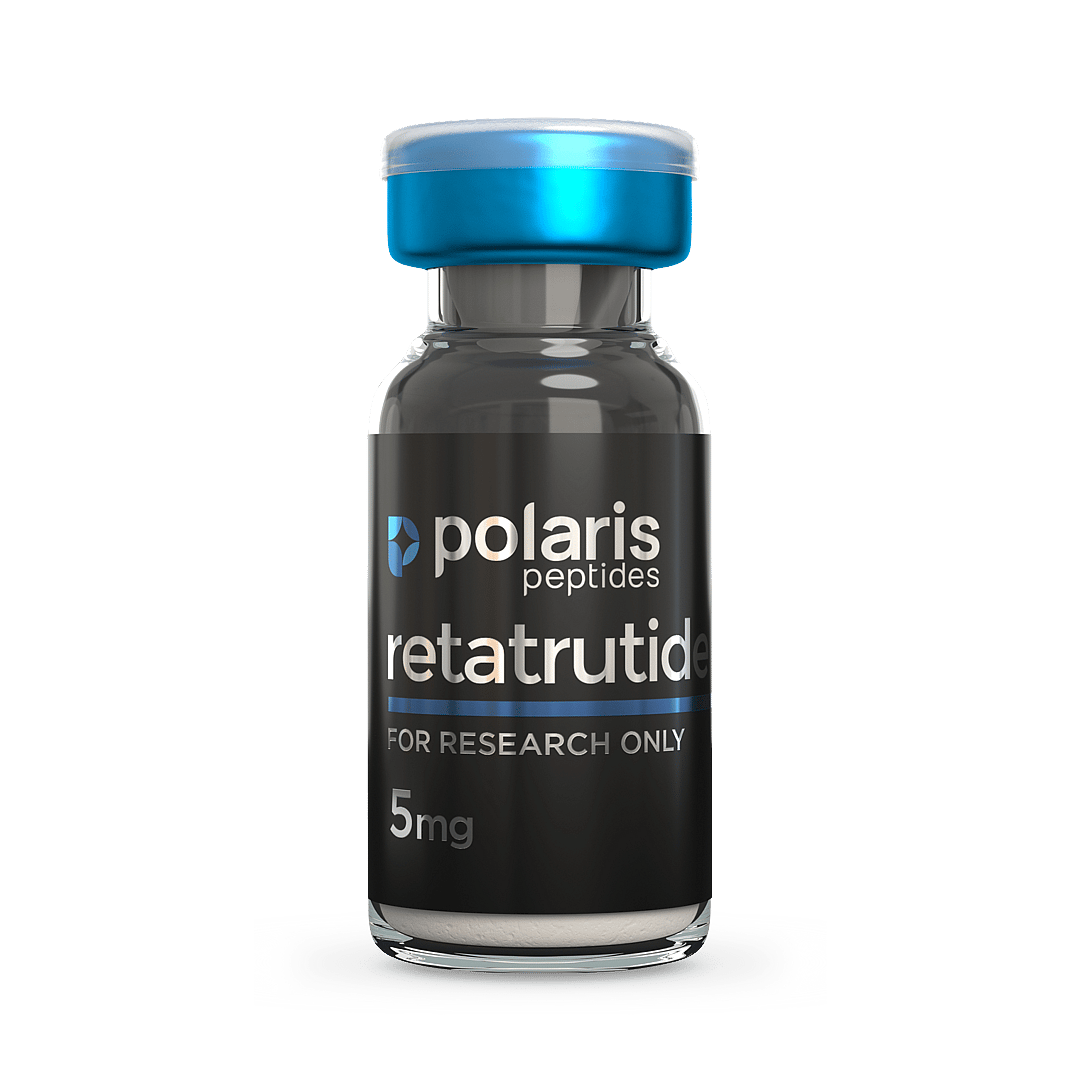
Retatrutide 5mg


$70.00
Buy Retatrutide 5 mg — GLP‑1/GIP/Glucagon Tri‑Agonist Peptide, High Purity
Lyophilized 5 mg vial, >99 % purity (HPLC‑MS) and vacuum‑sealed. Store −20 °C dry; 2–8 °C reconstituted; complete work within 28 days. For laboratory research only. Not intended for human or veterinary applications.Retatrutide 5mg is a synthetic research peptide investigated for its activity across multiple metabolic hormone pathways. Researchers study retatrutide in laboratory settings to better understand metabolic signaling, energy balance, glucose regulation, and related physiological processes. Supplied as a 5mg research format, this product is intended strictly for scientific research and laboratory use only.
Retatrutide 5mg – Research Peptide
Retatrutide 5mg is a synthetic peptide that has attracted significant interest in metabolic and peptide research. It is being investigated for its interaction with multiple hormone receptor pathways associated with glucose metabolism, energy regulation, and appetite-related signaling. Researchers use retatrutide as a subject of laboratory investigation to better understand how multi-pathway metabolic compounds may influence physiological processes.
This 5mg research format is designed for laboratories and researchers studying peptide biology, metabolic signaling, and related areas of scientific research.
What Is Retatrutide?
Retatrutide is a synthetic peptide designed to act on three metabolic hormone receptor pathways: glucagon-like peptide-1 (GLP-1), glucose-dependent insulinotropic polypeptide (GIP), and glucagon receptors. Because of this multi-receptor activity, retatrutide has become an important compound in research exploring complex metabolic signaling.
Unlike single-pathway research compounds, retatrutide provides researchers with an opportunity to investigate how simultaneous activity across several metabolic pathways can affect laboratory models. This makes it particularly relevant to studies involving energy balance, glucose regulation, lipid metabolism, and related biological mechanisms.
Retatrutide 5mg and Metabolic Research
Metabolic research often focuses on understanding how hormones and signaling pathways influence energy use, glucose handling, appetite-related mechanisms, and other physiological functions. Retatrutide provides a research model for examining interactions between GLP-1, GIP, and glucagon signaling.
Scientists may investigate these pathways individually or together to better understand their relationship with broader metabolic processes. Research involving retatrutide can contribute to the study of receptor activity, intracellular signaling, metabolic regulation, and peptide biology.
Key Research Areas
Retatrutide 5mg may be of interest to researchers working in several areas, including:
- Metabolic signaling research
- GLP-1, GIP, and glucagon receptor studies
- Glucose metabolism research
- Energy balance and metabolic regulation
- Peptide and receptor biology
- Cellular signaling investigations
- Laboratory studies involving metabolic pathways
These areas allow researchers to examine how multi-target peptide compounds interact with biological systems under controlled laboratory conditions.
Why Choose Retatrutide 5mg for Research?
A defined 5mg research format provides researchers with a standardized quantity for laboratory investigations and analytical work. Retatrutide can be incorporated into research programs focused on peptide characterization, receptor interactions, metabolic pathways, and related scientific questions.
When sourcing research peptides, factors such as product identity, labeling, handling requirements, and laboratory quality are important considerations. Researchers should always follow their institution’s applicable procedures for receiving, storing, documenting, and handling research materials.
Storage and Handling
Retatrutide 5mg should be handled and stored according to appropriate laboratory procedures and the manufacturer’s specifications. Researchers should review the product documentation for recommended storage conditions and protect the material from unsuitable environmental conditions.
Proper labeling, controlled laboratory handling, and appropriate documentation can help maintain research material integrity throughout the study process.
Research Use Only
Retatrutide 5mg is supplied strictly for laboratory and scientific research. It is not intended for human consumption, self-administration, diagnosis, treatment, prevention, or use as a dietary supplement. This product should only be handled by qualified researchers in an appropriate laboratory environment.
Retatrutide 5mg offers researchers a valuable compound for investigating multi-receptor metabolic signaling and advancing laboratory research into peptide biology, metabolic pathways, and related areas of science.
| Weight/Mass | 5mg |
|---|
Related products
Metabolic & GLP-1 Analogues