
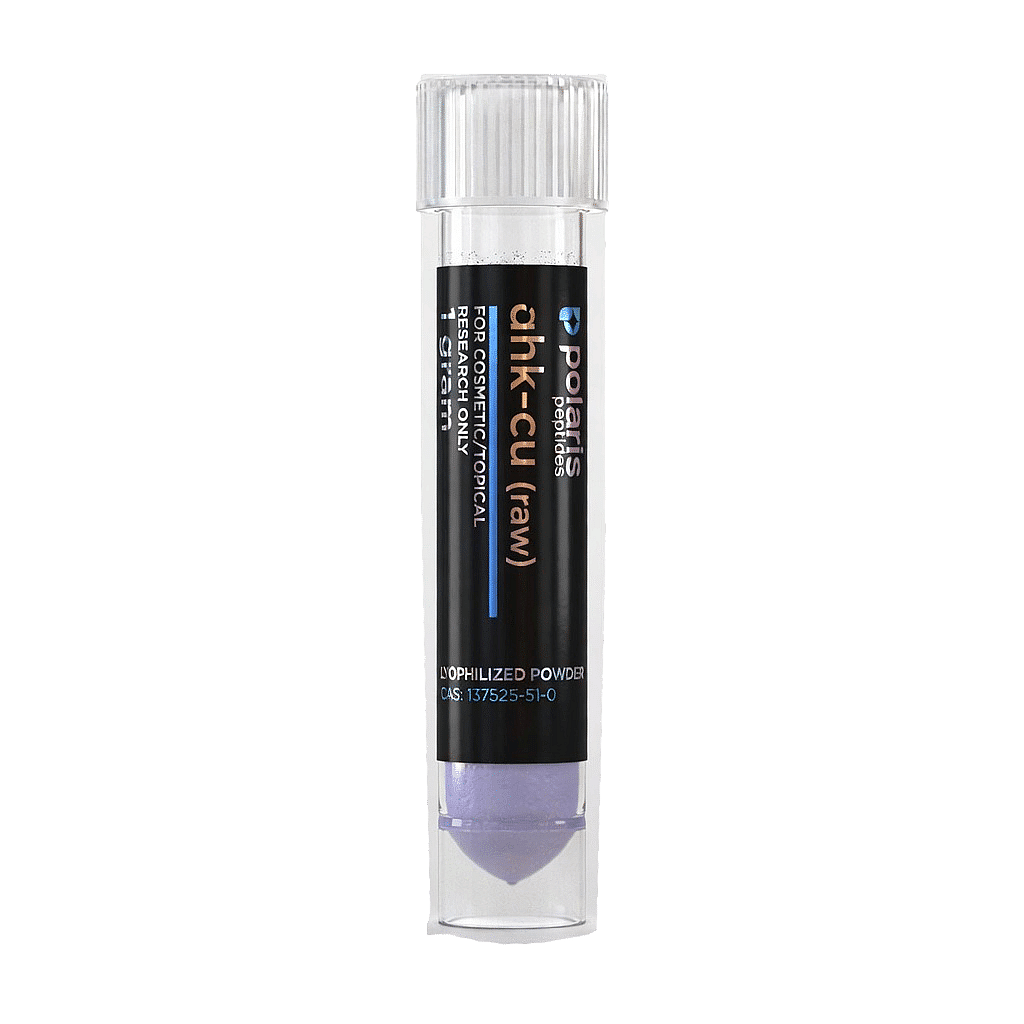
AHK-Cu 1g (Topical, raw)
$45.00
AHK-Cu 1g (Topical, Raw) is a research-grade copper-binding peptide supplied in raw form for topical research applications. AHK-Cu is being studied for its interactions with skin biology, cellular signaling, and processes associated with tissue and hair-follicle research. This product is intended for research and educational purposes only.
AHK-Cu 1g (Topical, Raw): An Informational Guide to Copper Peptide Research
AHK-Cu
AHK-Cu is a copper-binding tripeptide that has attracted interest in cosmetic science, peptide research, and skin biology. The peptide consists of the amino acids alanine, histidine, and lysine associated with copper, giving it a distinctive structure that researchers can investigate in topical and cellular research.
AHK-Cu 1g (Topical, Raw) is supplied as a raw research material rather than a finished cosmetic formulation. Researchers interested in copper peptides may study AHK-Cu to explore its interactions with biological systems, skin-related pathways, and hair-follicle biology.
AHK-Cu and Copper Peptide Research
Copper-binding peptides are an interesting area of research because copper ions participate in numerous biological processes. Copper-dependent enzymes are involved in cellular metabolism, connective-tissue biology, antioxidant systems, and other biochemical pathways.
Researchers studying AHK-Cu can investigate how peptide-copper interactions may influence cellular signaling and biological processes. This makes copper peptides relevant to research involving skin science, cosmetic formulation, and molecular biology.
Topical Research Applications of AHK-Cu
AHK-Cu has been investigated particularly in connection with topical and hair-follicle research. Scientists have explored copper peptide interactions with skin cells and biological pathways associated with the appearance and function of skin and hair.
Topical research may examine peptide stability, skin compatibility, cellular responses, formulation characteristics, and interactions between copper-containing peptides and biological surfaces.
Because the product is supplied in raw form, it is distinct from a ready-to-use cosmetic or topical preparation.
AHK-Cu and Skin Biology
Skin biology is one of the key areas where copper peptide research continues to develop. Researchers are interested in how copper-containing compounds interact with cellular pathways involved in skin structure and maintenance.
AHK-Cu provides a model for investigating peptide-copper interactions and their potential relevance to skin and tissue research. Laboratory studies may examine cellular signaling, peptide activity, stability, and interactions with other compounds.
These investigations can contribute to a broader understanding of copper peptides in cosmetic and biological science.
AHK-Cu and Hair-Follicle Research
Another area of interest is hair-follicle biology. Researchers have investigated various peptides and signaling molecules to better understand the biological processes associated with hair follicles.
AHK-Cu has attracted attention in this field because of its relationship with copper-peptide research. Scientific investigations may explore how peptide structure, copper binding, and cellular signaling interact within experimental models.
It is important to distinguish research findings from proven cosmetic or therapeutic outcomes.
AHK-Cu 1g Research Applications
AHK-Cu 1g (Topical, Raw) may be relevant to qualified researchers studying:
- Copper-binding peptides
- Skin biology
- Hair-follicle research
- Peptide chemistry
- Cellular signaling
- Cosmetic science
- Topical formulation research
- Molecular biology
Researchers should use appropriate laboratory procedures, validated analytical methods, and applicable safety and regulatory requirements when working with raw peptide materials.
Product Quality and Handling
When evaluating raw research peptides, researchers may consider identity, purity, copper content, analytical characterization, storage requirements, and product documentation.
Because AHK-Cu 1g is supplied in raw form, it should not automatically be considered a finished topical product. Any experimental formulation or laboratory preparation should follow appropriate scientific procedures and applicable requirements.
AHK-Cu 1g Research Overview
AHK-Cu 1g (Topical, Raw) is a copper-binding peptide research material of interest in skin, hair-follicle, cellular, and cosmetic science. Its distinctive peptide-copper structure provides researchers with an opportunity to investigate interactions between copper ions and biological systems.
As research into copper peptides continues, AHK-Cu remains an interesting compound for exploring peptide chemistry, topical research, cellular signaling, and skin-related biology.
Research Use Notice: AHK-Cu 1g (Topical, Raw) is presented as a research material. It is not a finished cosmetic product or an approved medical treatment. This information is provided for research and educational purposes only and is not medical advice.
| Weight/Mass | 1g |
|---|
Related products
Tropical Research Applications