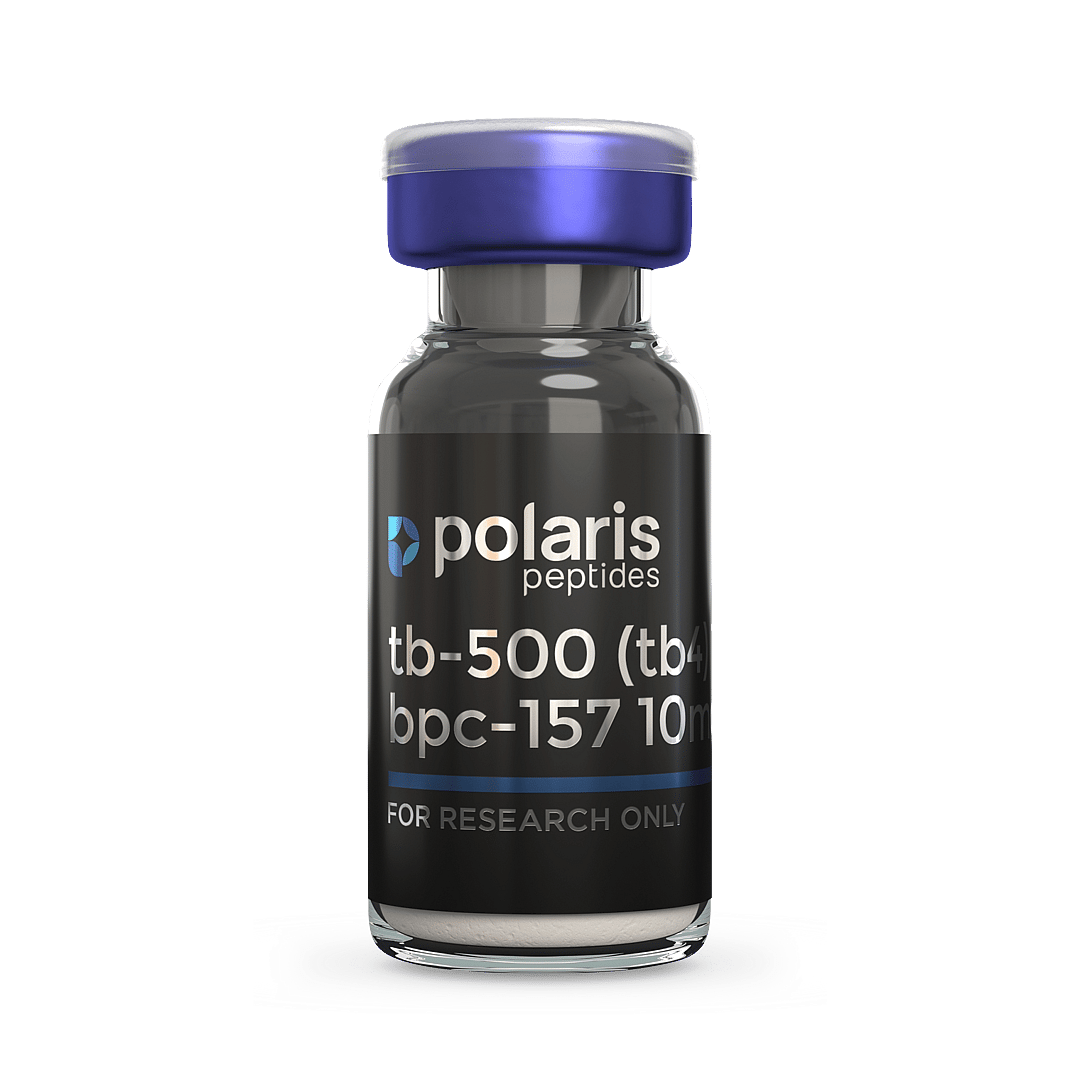
TB-500 10mg / BPC-157 10mg Blend
$110.00
TB-500 10mg / BPC-157 10mg Blend is an investigational peptide combination studied in laboratory research involving peptide biology, cellular signaling, and tissue-related biological processes. TB-500 is associated with thymosin beta-4 research, while BPC-157 is an experimental peptide studied in preclinical models. For research and educational purposes only.
TB-500 10mg / BPC-157 10mg Blend: An Informational Guide to Peptide Research
TB-500 and BPC-157 Blend
TB-500 10mg / BPC-157 10mg Blend is an investigational peptide combination containing two compounds that have attracted interest in preclinical and laboratory research. TB-500 is associated with research involving thymosin beta-4, while BPC-157 is a synthetic peptide that has been investigated primarily in experimental models.
The combination provides researchers with an opportunity to examine two different peptide pathways within experimental research. Areas of interest include cellular signaling, tissue biology, peptide interactions, and biological response mechanisms.
The labeled quantities indicate 10mg of TB-500 and 10mg of BPC-157 in the research product. These amounts should not be interpreted as therapeutic dosing recommendations.
TB-500 and Thymosin Beta-4 Research
TB-500 is commonly associated with thymosin beta-4 research. Thymosin beta-4 is a naturally occurring peptide involved in biological processes related to actin regulation and cellular movement.
Researchers have investigated thymosin beta-4 and related peptide sequences in areas including cell migration, cytoskeletal organization, angiogenesis-related pathways, and tissue biology.
TB-500 provides researchers with a useful subject for investigating these mechanisms and understanding how peptide signaling may interact with cellular processes.
BPC-157 Research
BPC-157 is an experimental peptide that has been investigated mainly in preclinical research models. Scientists have explored its biological activity in areas including cellular signaling, gastrointestinal biology, vascular pathways, and tissue-related processes.
Research involving BPC-157 remains an evolving field, and findings from experimental models should not automatically be interpreted as evidence of established effects in humans.
Why Combine TB-500 and BPC-157?
The combination of TB-500 and BPC-157 is of interest because the two peptides have been studied through different biological mechanisms.
Researchers may investigate whether studying these compounds together provides additional insight into cellular responses, peptide signaling, and tissue-related biological pathways.
Potential research areas include:
- Peptide biology
- Cellular signaling
- Tissue biology
- Cell migration research
- Actin and cytoskeletal pathways
- Vascular biology
- Experimental gastrointestinal research
- Molecular biology
TB-500 10mg / BPC-157 10mg Research Applications
This peptide blend may be relevant to qualified researchers studying peptide structure, cellular mechanisms, tissue biology, and experimental pharmacology.
Laboratory investigations should use appropriate research protocols, validated analytical methods, and applicable institutional or regulatory requirements.
Because the product contains two different research compounds, researchers may also evaluate the identity, purity, stability, and analytical characteristics of each component.
Product Quality and Storage Considerations
Quality control is important when working with investigational peptides. Researchers may consider peptide identity, purity, analytical testing, storage conditions, and supporting documentation when evaluating research materials.
Appropriate handling and storage according to manufacturer specifications can help maintain the integrity of the peptide blend during laboratory research.
TB-500 / BPC-157 Blend Research Overview
TB-500 10mg / BPC-157 10mg Blend combines two investigational peptides that have generated interest in preclinical peptide research. TB-500 is associated with thymosin beta-4 and research into cellular movement and actin-related pathways, while BPC-157 has been investigated in experimental models involving cellular and tissue-related processes.
Studying these compounds individually or together can help researchers explore peptide signaling and biological mechanisms across different experimental systems.
As research continues, further investigation may help clarify the biological properties, mechanisms, and potential applications of these experimental peptides.
Research Use Notice: TB-500 and BPC-157 are investigational research compounds and should not be represented as approved treatments or substitutes for medical care. This content is provided for informational and research purposes only and is not medical advice.
Related products