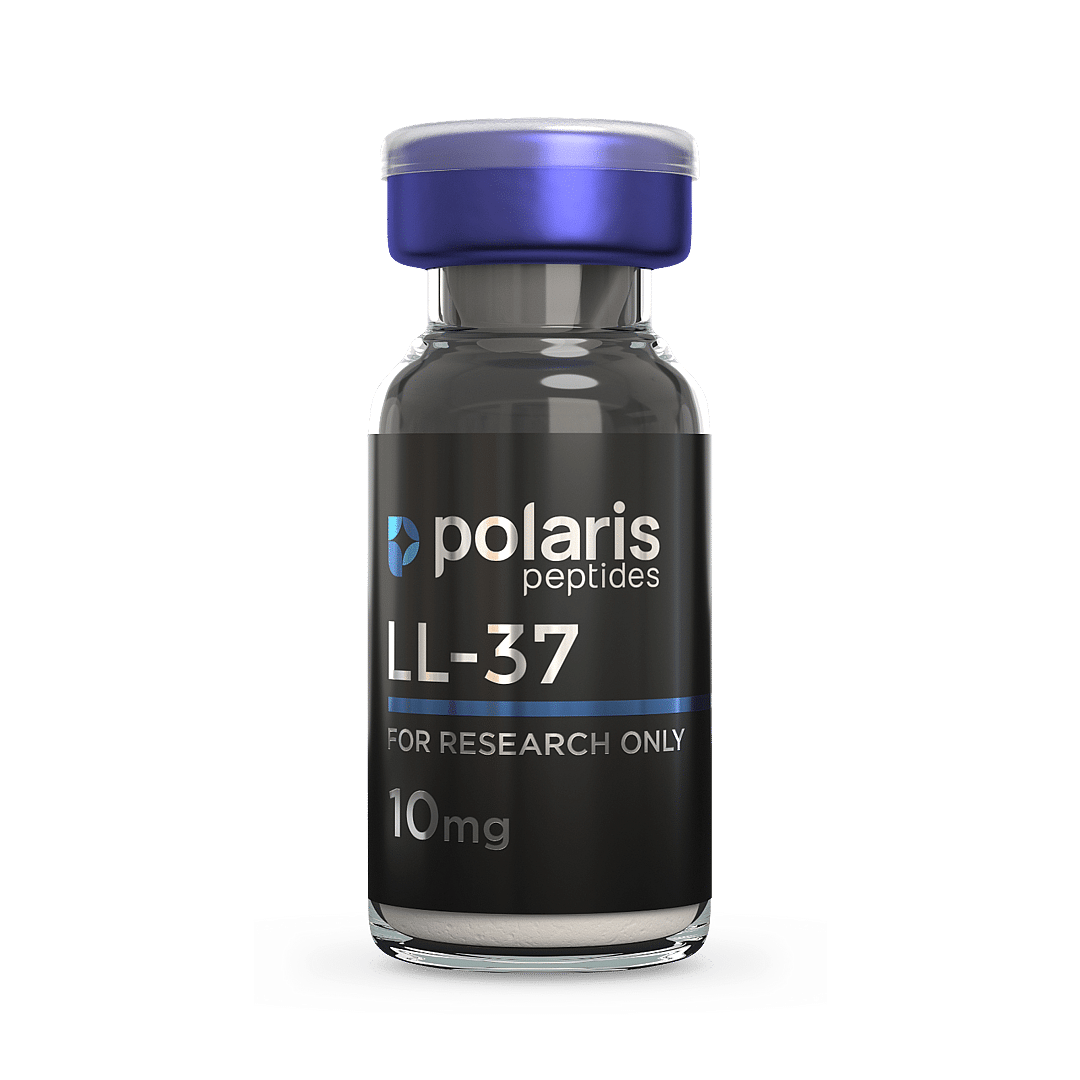
LL-37 10mg

$125.00
LL-37 10mg is an investigational antimicrobial peptide studied for its role in innate immune defense, cellular signaling, and host-response research. Researchers are exploring LL-37 and related peptide pathways to better understand antimicrobial activity, inflammation, tissue biology, and cellular interactions. For research and educational purposes only.
LL-37 10mg: An Informational Guide to This Investigational Peptide
LL-37
LL-37 is a naturally occurring antimicrobial peptide that has attracted considerable interest in molecular biology, immunology, and peptide research. It is derived from the human cathelicidin precursor protein and is associated with the body’s innate immune defense system.
LL-37 is particularly interesting to researchers because it has been investigated in connection with antimicrobial activity, cellular signaling, inflammation, and interactions between cells and their surrounding environment.
LL-37 10mg provides a defined quantity of this investigational peptide for research applications. The compound is commonly studied to better understand the biological functions and mechanisms associated with antimicrobial peptides.
LL-37 and Innate Immune Research
The innate immune system provides an early line of defense against microorganisms and other biological challenges. Antimicrobial peptides such as LL-37 are an important part of this system and are found in various tissues and cell types.
Researchers study LL-37 to investigate how antimicrobial peptides interact with microbial membranes and how these interactions may contribute to host defense. This makes LL-37 an important subject for laboratory studies involving microbiology, immunology, and molecular biology.
How Is LL-37 Studied?
LL-37 research encompasses several biological pathways. Scientists may investigate its interactions with microbial components, cellular membranes, immune-related molecules, and signaling pathways.
Research has also examined how LL-37 may influence cellular migration, communication, and inflammatory signaling. These areas are of interest because antimicrobial peptides can have functions that extend beyond direct antimicrobial activity.
Understanding these mechanisms may help researchers develop a clearer picture of how innate immune responses operate at the molecular level.
LL-37 and Cellular Signaling Research
One of the notable areas of LL-37 research involves cellular signaling. Researchers have investigated how this peptide interacts with different cellular receptors and signaling molecules.
These studies may focus on processes related to immune-cell activity, inflammatory signaling, tissue biology, and cellular responses to environmental stimuli.
Because LL-37 can interact with both microbial and host-cell components, it provides researchers with an interesting model for studying the relationship between antimicrobial defense and cellular communication.
Research Areas for LL-37 10mg
LL-37 10mg may be relevant to qualified laboratory researchers investigating antimicrobial peptides and related biological mechanisms.
Common research areas include:
- Antimicrobial peptide activity
- Innate immune defense
- Molecular biology
- Cellular signaling
- Host-microbe interactions
- Inflammatory pathway research
- Peptide structure and function
- Tissue and cellular biology
Research involving LL-37 should be conducted using appropriate laboratory procedures, validated methods, and applicable institutional or regulatory requirements.
LL-37 10mg Product Considerations
When evaluating an investigational peptide, researchers may consider factors such as peptide identity, purity, analytical characterization, storage conditions, and documentation.
The 10mg designation refers to the labeled quantity of peptide contained in the research product. It should not be interpreted as an established therapeutic dose or recommended human-use amount.
Proper storage and laboratory handling should follow the manufacturer’s specifications to help maintain product integrity.
LL-37 10mg Research Overview
LL-37 10mg is an investigational peptide of interest in antimicrobial, immunological, and cellular research. Its association with innate immune defense and cellular signaling makes it a valuable subject for scientists studying host-microbe interactions and peptide biology.
Ongoing research continues to examine the diverse biological activities associated with LL-37 and other antimicrobial peptides. Studying these mechanisms can provide greater insight into innate immunity, cellular communication, and the complex interactions between biological systems.
Research Use Notice: LL-37 is an investigational peptide. This product description is provided for informational and research purposes only and is not intended to diagnose, treat, cure, or prevent any disease or medical condition.
| Weight/Mass | 10mg |
|---|
Related products
Tissue Repair & Regenerative Research


Tissue Repair & Regenerative Research
Tissue Repair & Regenerative Research